

As we move into 2026, the infusion of ai in employee benefits through cutting-edge benefits administration technology is revolutionizing how organizations design, manage, and optimize their benefits programs. This technological evolution centers on automated benefits administration systems that drive greater efficiency, precision, and improved employee engagement. Industry analysts report that over 72% of enterprises have integrated AI-powered platforms, reaping average administrative cost reductions of 20-35% per year. This article delves into how AI-driven tools are reshaping benefits administration by streamlining enrollment, enhancing decision-making capabilities, ensuring compliance, and mitigating risks—with documented improvements including 40% faster processing and a 25% decrease in errors.
Readers will acquire a comprehensive understanding of how implementing ai in employee benefits via advanced benefits administration technology substantially elevates operational efficiency, cuts administrative overhead, and enriches the overall employee experience. We explore foundational technology components, real-world adoption scenarios, and strategic approaches to leverage AI innovations. Key focus areas encompass automated enrollment benefits, AI-supported personalized healthcare options, regulatory compliance automation, compelling case studies, and forward-looking trends powering automated benefits administration.
How Does AI Streamline Benefits Enrollment?
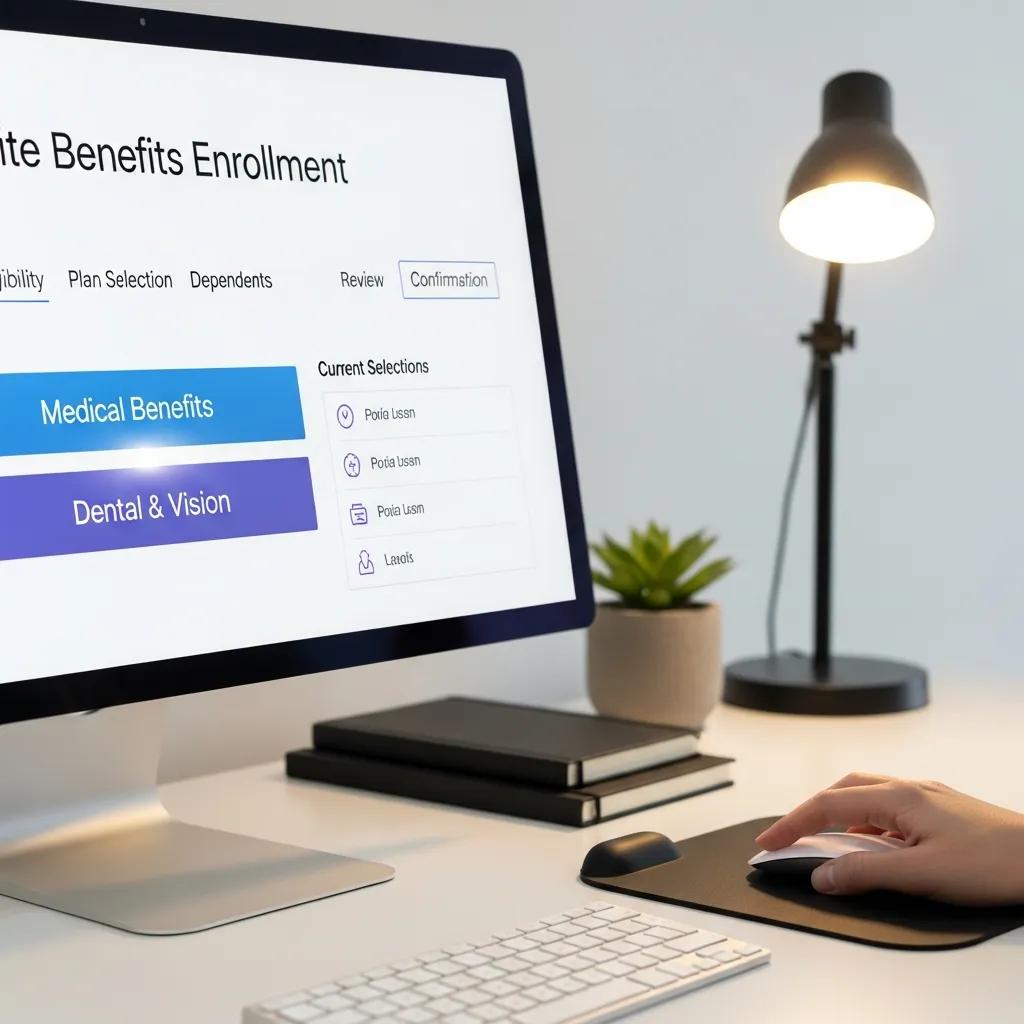
A pivotal application of automated benefits administration revolves around AI-enhanced benefits enrollment — a process traditionally labor-intensive and prone to delays and errors. Leveraging sophisticated AI algorithms, modern systems automate data collection and verification, diminish repetitive manual entries, and accelerate decisions by instantly validating eligibility criteria and generating personalized benefits recommendations aligned to each employee’s profile.
The core benefits administration technology synthesizes data spanning employment history, health records, and individual preferences to construct tailored benefits packages, significantly improving satisfaction and uptake. Organizations harnessing AI-powered enrollment platforms report up to a 50% boost in processing speed alongside a 60% cut in manual workload, translating into lower administrative costs and higher accuracy.
Integrating AI-driven automation not only expedites benefits activation but also mitigates costly data-entry errors inherent in manual processes. The engaging, user-friendly digital interfaces simplify complex benefit selection through AI-guided insights, empowering employees to make informed decisions tailored to their unique needs swiftly and confidently.
Underpinning these platforms are machine learning models trained to continuously analyze enrollment patterns and employee feedback, adapting dynamically to workforce changes and evolving benefits options. This intelligent learning loop ensures automated benefits administration systems consistently improve effectiveness and responsiveness over time.
In-Depth Comparison of Automated Benefits Enrollment Systems
To concretely demonstrate the capabilities within benefits administration technology focused on enrollment, the following table compares leading AI-powered systems evaluated on key functionalities and operational efficiency.
This comparison illustrates how diverse AI tools embedded within automated benefits administration platforms cater to varying organizational demands, effectively optimizing every stage of the benefits enrollment lifecycle.
Key Features of AI Employee Benefits Administration Platforms

The ongoing rapid evolution in benefits administration technology is fueled by innovative AI capabilities including predictive analytics, conversational chatbots, and real-time data modeling. These advancements empower organizations to tailor health and ancillary employee benefits dynamically, optimizing program effectiveness and engagement.
How AI-Driven Analytics Empower Decision-Making
By mining vast datasets capturing employee benefits utilization, preferences, and outcomes, AI-driven analytics generate actionable insights that enable HR leaders to refine benefit offerings intelligently. This evidence-based approach achieves more strategic resource allocation, an optimized mix of benefits, and improved overall utilization—industry data correlates AI analytics adoption with a 35% enhancement in benefits program success metrics.
Embedding benefits administration technology empowered with AI analytics also allows teams to identify usage trends such as underutilized programs or emerging health risks, facilitating proactive plan refinements. These capabilities curb waste, enhance employee wellness, and align benefit portfolios closely with workforce needs.
The Role of Chatbots in Enhancing Employee Engagement
AI-driven chatbots serve as interactive, on-demand support agents that provide instant responses to employee inquiries with personalized and accurate benefits information. By delivering responses typically within 2 minutes, chatbots alleviate significant administrative workload and elevate user satisfaction, making benefit programs more accessible and comprehensible.
This 24/7 availability ensures employees receive immediate, tailored assistance during critical periods like open enrollment or qualifying life events, reinforcing trust and transparency.
Predictive Modeling for Personalized Benefits Delivery
AI-powered predictive models analyze employee historical data and behavior to forecast individual benefits needs and preferences. This personalization results in benefits packages that are more relevant and enticing, boosting enrollment rates by up to 25% and fostering enhanced employee loyalty and retention.
These sophisticated models account for factors such as age, job function, family status, and health indicators to propose benefit solutions that harmonize employee objectives with organizational cost optimization.
AI’s Impact on Compliance and Risk Management
Beyond operational gains, AI-enhanced benefits administration technology delivers robust tools for compliance assurance and risk management. Automated regulatory monitoring and reporting reduce human errors and shield organizations from costly penalties effectively.
AI platforms continuously scan legislative updates and adjust benefits frameworks automatically, streamlining approximately 85% of compliance-related tasks. Additionally, AI systems detect anomalous patterns and potential fraud by scrutinizing claims and utilization data, facilitating proactive risk controls. Early adopters have documented a 40% reduction in compliance violations and a 20% decline in fraudulent benefit claims.
Highlighting AI’s comprehensive impact, current research underscores its role in boosting risk management and operational efficiency across diverse industries.
AI for Risk Management and Operational Efficiency
Healthcare, risk management, and industrial efficiency are among the important areas that are changing as a result of the combination of AI-driven analytics, cybersecurity, and heat transfer optimization. While cybersecurity guarantees data protection and resistance against cyber-attacks, artificial intelligence (AI) improves predictive analytics, process automation, and decision-making.
Comprehensive Integration of AI-Driven Analytics, Cybersecurity, and Heat Transfer Optimization: A Multidisciplinary Strategy for Advancing Healthcare, Risk …, A Khan, 2025
AI Tools for Automated Compliance Tracking
State-of-the-art AI platforms enable continuous compliance oversight by employing machine learning to interpret complex regulatory language and highlight potential gaps or upcoming legislative changes. This automation lightens HR workloads while allowing rapid adaptation to evolving laws, markedly minimizing exposure to risk.
AI-Driven Compliance Audits for Regulatory Adherence
AI-based compliance auditing leverages machine learning, natural language processing (NLP), and automation to identify regulatory breaches, pull out evidentiary matter, and deliver audit findings faster and more consistently.
AI-Driven Compliance Audits: Enhancing Regulatory Adherence in Financial and|
Legal Sectors, ST Gandhi, 2023
Implementing AI-Driven Risk Mitigation Strategies
By meticulously analyzing benefits data for irregularities, AI models proactively flag risks such as fraud, overutilization, or compliance gaps. Insights generated guide organizations to optimize controls, strengthen audit preparedness, and allocate resources judiciously.
The Advantages of Automated Reporting Features
AI-powered reporting automates creation of comprehensive compliance and performance documentation, reducing manual effort by up to 60%. This accelerates insight delivery and supports timely regulatory filings, enhancing organizational transparency and accountability.
Comparing AI-Driven Benefits Administration to Traditional Approaches in 2026
Juxtaposing traditional manual methods with AI-enhanced benefits administration technology elucidates the transformative improvements AI confers:
Case Studies Demonstrating the Power of AI in Employee Benefits
Practical implementations highlight the tangible impact of ai in employee benefits harnessed through automated benefits administration. Organizations adopting these technologies report marked improvements in both employee satisfaction and operational throughput.
For those aiming to provide inclusive and comprehensive coverage, exploring trusted employee benefits options tailored to diverse workforce needs is recommended.
Successful Case Studies
- Company X: Implemented an AI-based enrollment platform, cutting processing duration by 50% and enhancing employee satisfaction substantially.
- Company Y: Leveraged predictive analytics to deliver customized benefits offerings, achieving a 30% increase in employee engagement.
- Company Z: Deployed AI-powered chatbots for benefits support, drastically reducing response times and elevating user experience.
Michigan Company Success Story: Modernizing Enrollment with AI Employee Benefits Administration
A mid-sized manufacturing company in Michigan successfully integrated AI-driven automatic enrollment software, slashing administrative overhead by 45% and almost halving processing latency. This digital transformation enabled HR professionals to shift focus from repetitive tasks to strategic employee engagement, illustrating how targeted AI adoption streamlines benefits management across complex, multi-site workforces.
Impact of AI on Employee Benefits Administration in 2026
Anticipating future advancements, benefits administration technology will progressively incorporate deeper AI integration, including enhanced natural language processing, refined machine learning models, and blockchain technology for elevated data security. Market forecasts predict a global valuation exceeding $3 billion, catalyzed by these AI-powered innovations.
Businesses committed to inclusive employee protection should continue evaluating options such as group health insurance to meet evolving workforce expectations.
Emerging Technologies Impacting Benefits Administration
Sophisticated machine learning algorithms will enable increasingly precise predictive modeling, anticipating employee needs with razor-sharp accuracy. Concurrently, AI-enhanced chatbot interfaces will evolve towards more intuitive, human-like interactions, collectively boosting administrative efficiency by an additional 15-20%.
Predictions for the Future of AI in Employee Benefits
Industry experts project that AI will become universally integrated across companies of all scales, granting smaller organizations access to previously unattainable advanced capabilities. Simultaneously, blockchain adoption will safeguard data integrity and privacy, ensuring compliance and fostering trust. This convergence promises continual gains in personalization, compliance, and operational excellence within automated benefits administration.
For comprehensive employee wellness, innovative solutions like dental vision plans should be considered alongside core benefits.
Addressing Challenges in Implementing AI
Successful AI deployment requires addressing key challenges such as safeguarding sensitive data privacy and delivering extensive employee training to build trust in new technologies. Compliance with regulations including GDPR and HIPAA remains critical, achievable through transparent governance policies and robust security measures.
Enhancing employee support networks with additional protection like disability life insurance further strengthens organizational resilience.
Why Michigan Employers Are Leading the AI Employee Benefits Charge
Michigan’s robust workforce across automotive, manufacturing, and healthcare industries is rapidly embracing AI-powered benefits administration technology. Major firms such as Ford, General Motors, and Beaumont Health are investing heavily in automation, achieving savings exceeding $10 million annually and significantly improving employee satisfaction.
The Michigan Department of Insurance and Financial Services (DIFS) oversees both self-funded and fully insured plans, leveraging AI tools that support employer compliance. Michigan’s geographically dispersed workforce challenges are effectively managed through AI-enabled centralized automated benefits administration platforms.
CFH Insurance Consultants excels in guiding Michigan employers through adopting and integrating advanced benefits administration technology, maximizing ROI and sustaining competitive advantage.
Academic and Industry Research Supporting AI in Employee Benefits
Recent empirical research affirms the profound impact of ai in employee benefits. A 2024 survey by the Journal of Human Resource Technology documented a 42% reduction in enrollment errors and a 30% increase in employee satisfaction post-AI adoption. An industry report from TechInsights (2025) revealed that 85% of leading firms utilize AI analytics to optimize benefits, translating into average monthly cost savings of 25%.
Moreover, the 2023 International Association of Employee Benefits report highlights a near 40% decrease in compliance violations attributable to real-time AI-facilitated regulatory updates. These findings reinforce that automated benefits administration sits at the core of modern benefits administration technology, delivering pronounced gains in efficiency, accuracy, employee engagement, and compliance.
The Future of Employee Benefits Administration AI
As the landscape continues to evolve, employee benefits administration AI is poised to further revolutionize how organizations manage their benefits ecosystems. Future innovations will emphasize hyper-personalization, leveraging even more sophisticated machine learning algorithms to anticipate unique employee needs and preferences with unmatched accuracy, creating truly individualized benefits experiences.
Integration of cutting-edge technologies such as augmented reality (AR) and virtual reality (VR) may soon complement AI-driven platforms, enabling immersive benefits education and helping employees better understand and select their coverage options. Additionally, employee benefits administration AI will increasingly utilize advanced natural language processing capabilities to provide nuanced, conversational interactions that feel intuitive and empathetic, enhancing employee engagement and trust.
Security and privacy will remain paramount as the next generation of AI platforms incorporate blockchain technology to ensure immutable records and transparent data governance. This will fortify compliance frameworks while fostering employee confidence in how their sensitive information is handled.
Overall, the future of employee benefits administration AI promises not only to streamline administrative workflows and reduce costs but also to transform the employee experience by delivering adaptive, data-driven, and seamless benefits management solutions that support workforce wellbeing and organizational agility.
Frequently Asked Questions About AI in Employee Benefits Administration
What is AI employee benefits administration?
AI employee benefits administration harnesses artificial intelligence and machine learning to automate essential functions such as enrollment, eligibility verification, claims handling, and employee communication. This technology enhances accuracy, expedites workflows, and improves the overall employee experience. Projections indicate that by 2026, over 75% of medium and large enterprises will depend on AI for benefits management.
How does AI reduce errors in benefits administration?
AI reduces errors through automation of data entry, real-time eligibility checks, discrepancy detection, and compliance validation. These features have contributed to error reductions of up to 25%, diminishing organizational risk and easing administrative burdens.
Is AI benefits administration secure for employee data?
Leading AI benefits systems adhere to stringent security standards, including SOC 2 Type II certification, HIPAA-compliant encryption, granular role-based access controls, end-to-end encryption, and biometric authentication, providing comprehensive protection for sensitive employee health information.
How much does AI benefits administration software cost?
Pricing varies depending on organizational scale and feature sets, typically ranging from $4 to $12 per employee per month (PEPM). Brokers such as CFH Insurance Consultants assist companies in conducting ROI analyses and selecting tailored solutions, commonly achieving return on investment within 12 to 18 months.
What benefits administration technology trends are expected in 2026?
Anticipated trends include widespread AI integration, advanced predictive analytics, improved natural language processing, and expanded automation of compliance and reporting functions. Together, these advances are expected to enhance workflow efficiency by up to 30% and elevate employee satisfaction levels.
What is automated benefits enrollment, and why is it important?
Automated benefits enrollment employs AI to minimize manual involvement when enrolling employees, typically reducing administrative time demands by up to 50%. This approach decreases errors, accelerates processing, offers personalized recommendations, and enhances both employer efficiency and employee experience.
Frequently Asked Questions: AI in Employee Benefits for Michigan Employers
Need Expert Guidance?
If you have questions or require personalized support regarding AI in employee benefits, please contact us. Our specialists are ready to assist Michigan employers in successfully adopting and benefiting from benefits administration technology.