

Michigan Employers’ Guide to Level-Funded Health Insurance
Written by the CFH Insurance Consultants Team — Independent employee benefits brokers serving Michigan employers for 20+ years. Licensed in Michigan. Specializing in group health insurance, ACA compliance, and employee benefits consulting for businesses in Bloomfield Hills and Southeast Michigan. Contact us at info@cfhic.com or 248.370.8853.
Level-funded health insurance is an innovative approach that combines elements of self-funding and traditional fully insured plans, offering Michigan employers a unique way to manage their employee health benefits. This type of insurance allows businesses to pay a fixed monthly amount, which covers both expected claims and administrative costs, while also providing the potential for cost savings. Employers benefit from predictable budgeting and the opportunity to retain any surplus funds at the end of the plan year. In this guide, we will explore how level-funded health insurance works, its key features, benefits, risks, and how it compares to fully insured plans.
How Does Level-Funded Health Insurance Work for Michigan Employers?
Level-funded health insurance operates on a monthly payment structure that allows employers to budget effectively for their employee health benefits. Each month, employers pay a fixed amount that covers anticipated claims, administrative fees, and stop-loss insurance. This structure provides a safety net against unexpected high claims while allowing for potential savings if actual claims are lower than expected. The claims management process is typically handled by a third-party administrator, ensuring that employers can focus on their core business operations. This model not only simplifies financial planning but also enhances the overall management of employee health benefits.
What Are the Key Features of Level-Funded Health Plans?
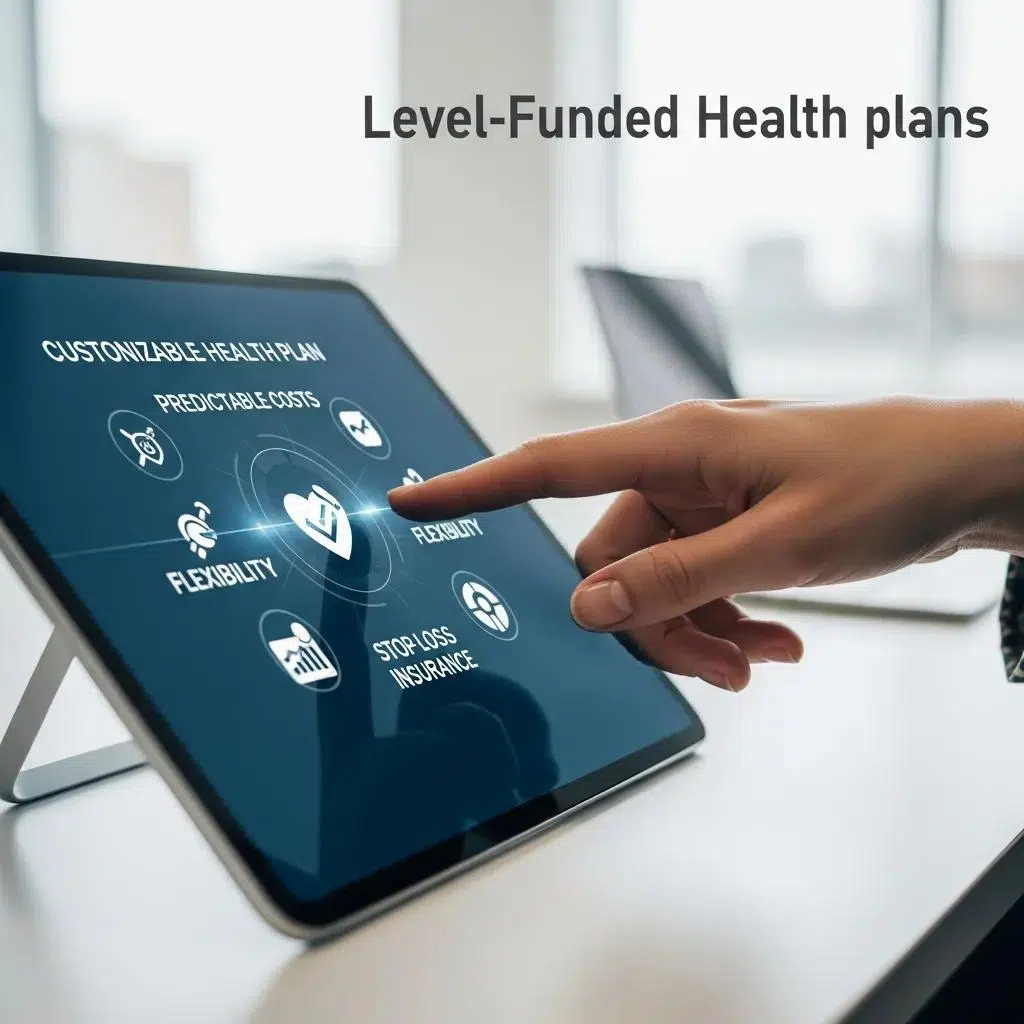
Level-funded health plans come with several key features that distinguish them from traditional insurance options. These include:
- Predictable Costs: Employers pay a consistent monthly fee, making budgeting easier and more reliable.
- Flexibility in Plan Design: Employers can customize their health plans to better meet the needs of their workforce.
- Stop-Loss Insurance: This feature protects employers from excessive claims, ensuring that they are not financially burdened by unexpected high costs.
These features make level-funded plans an attractive option for many Michigan employers looking to optimize their health benefits.
Level-Funded Health Insurance and Michigan Regulations
Michigan’s Department of Insurance and Financial Services (DIFS) oversees stop-loss insurance carriers operating within the state. Stop-loss policies must be filed and approved by DIFS before they can be offered to Michigan employers, ensuring regulatory compliance and consumer protection. In Michigan’s small employer market (2–50 employees), fully insured plans are subject to Affordable Care Act (ACA) community rating rules under the Michigan Insurance Code. This means fully insured plans cannot medically underwrite these groups, which can limit premium variability based on health status. Level-funded plans, however, can use limited medical underwriting through the stop-loss component, potentially offering lower premiums for groups with favorable health histories. For Michigan employers with 51 or more employees, who fall under large group rules, there is even greater flexibility when evaluating level-funded versus self-funded arrangements, allowing for tailored solutions that best fit their workforce and financial goals.
How Does Level-Funded Insurance Combine Self-Funded and Fully Insured Elements?
Level-funded insurance merges the best aspects of self-funded and fully insured plans. Employers retain more control over their health benefits while also mitigating risk through stop-loss insurance. This hybrid model allows businesses to benefit from the cost savings associated with self-funding, such as lower premiums and the ability to retain unspent funds, while still having the security of a fully insured plan’s risk management features. This combination provides a balanced approach to employee health benefits, catering to the diverse needs of Michigan employers.
This approach aligns with expert views on how employer self-insurance, when combined with stop-loss coverage, can effectively manage healthcare costs.
Employer Self-Insurance with Stop-Loss Coverage
The current system of employer-paid self-insurance supplemented by stop-loss coverage should be able to facilitate the use of new cost-effective gene therapies.
Is employment group insurance financing of expensive gene therapies threatened in the United States?, JA Doshi, 2023
What Are the Benefits and Risks of Level-Funded Health Insurance?

Level-funded health insurance offers several advantages, but it also comes with certain risks that employers should consider.
Benefits
- Cost Savings: Employers can save money if claims are lower than expected, as they can retain surplus funds.
- Predictability: Fixed monthly payments help employers manage their budgets more effectively.
- Enhanced Control: Employers have more flexibility in designing their health plans to suit their workforce’s needs.
Risks
- Financial Risk Exposure: If claims exceed the expected amount, employers may face higher costs.
- Claims Variability: Fluctuations in claims can lead to unpredictable expenses.
- Administrative Responsibilities: Employers may need to manage more administrative tasks compared to fully insured plans.
Understanding these benefits and risks is crucial for Michigan employers considering level-funded health insurance as a viable option for their employee benefits strategy.
Federal Compliance Considerations for Level-Funded Plans
ERISA Preemption
Level-funded plans are typically structured as self-funded ERISA (Employee Retirement Income Security Act) plans. Because of ERISA preemption, these plans are generally exempt from state insurance mandates — meaning Michigan’s state-level benefit mandates that apply to fully-insured plans do not automatically apply to level-funded plans. For Michigan employers, this creates meaningful flexibility in plan design: you can tailor covered benefits, cost-sharing structures, and network arrangements more freely than a fully-insured plan allows. However, this flexibility comes with greater compliance responsibility. The employer, as the plan sponsor, takes on fiduciary obligations under ERISA. Importantly, while the underlying self-funded plan enjoys ERISA preemption, the stop-loss insurance component that protects the employer against catastrophic claims is still sold as an insurance product and remains subject to Michigan state regulation and DIFS oversight.
Section 105(h) Nondiscrimination Testing
Self-funded plans — including level-funded plans — must comply with Section 105(h) nondiscrimination rules under the Internal Revenue Code. These rules prohibit employers from structuring their health plan to provide disproportionately better benefits to highly compensated employees (HCEs) compared to rank-and-file workers. For small Michigan businesses — where company owners, executives, and key employees may represent a significant share of the workforce — this is a critical compliance consideration during plan design. Failing 105(h) testing can result in the value of excess benefits being included in the gross income of highly compensated employees. Employers should work with a qualified benefits advisor to structure their plan in a way that passes nondiscrimination testing before the plan goes live.
COBRA Implications
Level-funded plans are subject to COBRA (Consolidated Omnibus Budget Reconciliation Act) continuation coverage requirements, just like traditional fully-insured group health plans. Departing employees and qualifying dependents have the right to continue coverage under the level-funded plan for the applicable COBRA continuation period. One nuance specific to level-funded plans: because claims experience fluctuates month to month, employers should factor active COBRA participants into their aggregate stop-loss claims projections. A COBRA participant with high medical utilization counts toward the employer’s total claims pool and can affect whether the aggregate stop-loss threshold is reached in a given month.
Navigating ERISA requirements, nondiscrimination testing, and Michigan state insurance regulations simultaneously is one of the most complex aspects of adopting a level-funded plan. Working with an independent employee benefits broker like CFH Insurance Consultants — based in Bloomfield Hills and serving Michigan employers for 20+ years — ensures your level-funded plan is structured for full compliance with both federal ERISA obligations and applicable Michigan state requirements. Our team coordinates with your legal counsel and third-party administrator (TPA) to keep your plan audit-ready from day one. Contact CFHIC at info@cfhic.com or 248.370.8853 to discuss your compliance needs.
Which Cost Predictability Advantages Do Level-Funded Plans Offer?
Level-funded plans provide significant cost predictability advantages that can greatly benefit employers. The fixed monthly payments allow for easier financial planning, as businesses can anticipate their health insurance costs without the fear of unexpected spikes in expenses. Additionally, any surplus funds at the end of the plan year can be rolled over or used to offset future costs, further enhancing budget stability. This predictability is particularly valuable for small to medium-sized businesses that may struggle with the financial unpredictability often associated with traditional health insurance plans.
This emphasis on predictable payments is echoed by research highlighting how level-funded plans structure their monthly fees to cover various components, including administrative costs and claims reserves.
Predictable Monthly Payments in Level-Funded Plans
predictable monthly payments. Unlike fully-insured plans where premiums are fixed, level-funded plans’ payments cover administration fees to their plan administrator and stop loss premiums to their stop-loss carrier, plus a reserve for expected claims.
In Misunderstanding Level-Funded Health Insurance Plans, Is The Administration Missing An Opportunity?, G Bai, 2023
What Potential Risks Should Employers Consider?
While level-funded health insurance offers many advantages, employers should also be aware of potential risks. These include:
- Financial Risk Exposure: If claims exceed the expected amount, employers may incur additional costs.
- Claims Variability: The unpredictability of claims can lead to financial strain.
- Administrative Responsibilities: Employers may face increased administrative tasks compared to fully insured plans.
These risks necessitate careful consideration and planning to ensure that level-funded health insurance aligns with the employer’s financial capabilities and risk tolerance.
How Does Level-Funded Health Insurance Compare to Fully Insured Plans?
When comparing level-funded health insurance to fully insured plans, several key differences emerge. Level-funded plans typically offer lower premiums and greater flexibility in plan design, allowing employers to tailor their health benefits to better meet the needs of their employees. In contrast, fully insured plans provide a more straightforward approach with less administrative burden but often come with higher costs and less flexibility.
This comparison highlights the advantages of level-funded plans for employers seeking cost-effective and customizable health insurance solutions.
What Are the Differences in Cost Structure and Risk Management?
The cost structure and risk management strategies of level-funded and fully insured plans differ significantly. Level-funded plans allow employers to pay a fixed monthly amount, which can lead to cost savings if claims are lower than expected. In contrast, fully insured plans require employers to pay premiums based on the risk profile of their employees, which can result in higher costs. Additionally, level-funded plans incorporate stop-loss insurance to protect against excessive claims, while fully insured plans transfer all risk to the insurer.
Why Might Michigan Employers Prefer Level-Funded Plans?
Michigan employers may prefer level-funded plans for several reasons. The cost control offered by fixed monthly payments allows for better budgeting and financial planning. Additionally, the flexibility in plan design enables employers to create health benefits that align with their workforce’s specific needs. This combination of predictability and customization makes level-funded plans an appealing option for many businesses in Michigan.
CFH Insurance Consultants, as an independent employee benefits broker, works with multiple Michigan-based and national insurance carriers that offer level-funded products — including carriers that specialize in small and mid-size employer groups. Because plan structures, stop-loss attachment points, and premium rates vary significantly by carrier, employer size, and industry, working with an independent broker gives Michigan employers access to a broader range of options than going directly to a single carrier.
What Are the Eligibility and Enrollment Requirements for Michigan Employers?
Eligibility for level-funded health insurance typically depends on the size of the business and the number of employees. Employers must meet certain criteria to qualify for these plans, which may include having a minimum number of employees enrolled in the health plan. The enrollment process usually involves submitting necessary documentation and working with an insurance consultant to ensure compliance with state regulations.
Who Qualifies for Level-Funded Health Insurance in Michigan?
In Michigan, businesses of various sizes can qualify for level-funded health insurance, although specific eligibility criteria may vary by insurer. Generally, employers with a minimum number of employees, often around 5-10, are eligible to participate in level-funded plans. Additionally, the health status of employees may be considered during the underwriting process, impacting the overall cost and availability of coverage.
What Is the Enrollment Process for Employers and Employees?
The enrollment process for level-funded health insurance involves several key steps:
- Assessment of Eligibility: Employers must determine if they meet the eligibility criteria for level-funded plans.
- Documentation Submission: Necessary documents, including employee health information, must be submitted to the insurer.
- Plan Selection: Employers work with insurance consultants to select the most suitable plan for their workforce.
- Enrollment Period: Employees are informed about the plan options and can enroll during the designated enrollment period.
This structured approach ensures that both employers and employees understand their options and responsibilities within the level-funded health insurance framework.
Example: Potential Cost Savings for a Michigan Employer
Consider a Michigan employer with 25 employees currently paying $45,000 per month in fully-insured premiums. Depending on the group’s claims history and health profile, a level-funded plan could potentially reduce monthly fixed costs by 10–20% — saving $4,500 to $9,000 per month. However, employers must weigh this potential savings against the risk of claims variance in higher-cost months. This example is illustrative; actual savings vary based on group health data, carrier, and plan design. A licensed Michigan benefits broker can model specific scenarios for your group.
Get Expert Guidance on Level-Funded Health Insurance
As an independent broker with 20+ years serving Michigan employers, CFHIC can compare level-funded options across multiple carriers — at no cost to you. Schedule a no-obligation consultation at cfhic.com.